

How to Choose the Best A2 Cow Ghee for Your Family
How to Choose the Best A2 Cow Ghee for Your Family
Ghee has always had a special place in Indian kitchens. A spoonful of warm ghee over dal and rice, a little on a hot roti, or a few drops added to a traditional sweet can instantly bring familiar flavour and aroma to a meal.
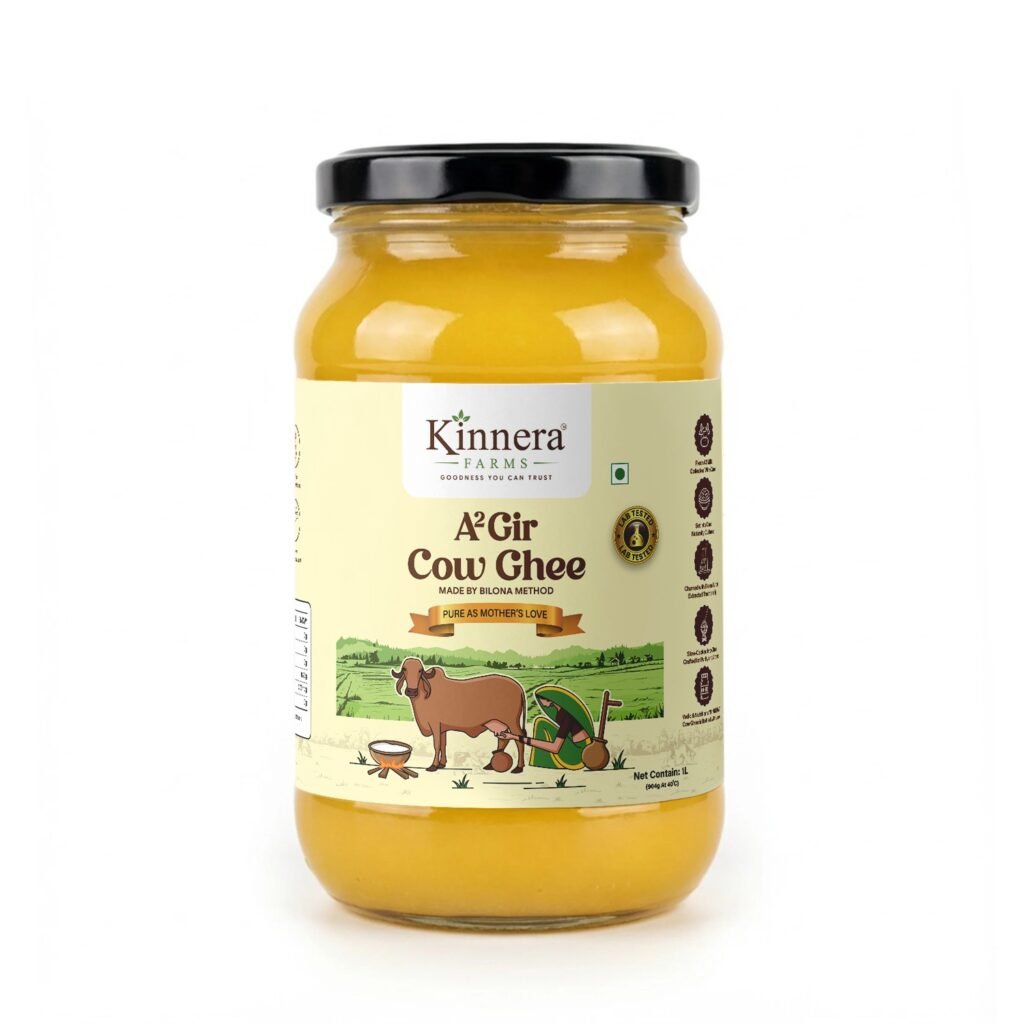
Today, however, choosing ghee is not always simple. Walk into a store or search online and you will find cow ghee, A2 cow ghee, Bilona ghee, A2 Bilona ghee and buffalo ghee. With so many choices, it is easy to wonder which one is actually right for your family.
If you are considering A2 cow ghee, don’t choose it just because the label sounds premium. The milk source, preparation method, ingredients, packaging and overall transparency of the brand all deserve attention.
Here is a practical guide to help you choose the best A2 cow ghee for your kitchen.
What Is A2 Cow Ghee?
A2 cow ghee is generally made from milk marketed as containing the A2 type of beta-casein protein. It is commonly associated with certain Indian cattle breeds, including Gir cows.
However, the word “A2” alone does not tell you everything about the quality of the ghee.
Two products can both be labelled A2 cow ghee while differing in their sourcing and manufacturing processes. Therefore, it is worth looking beyond the front label and understanding how the product is actually made.
1. Check the Milk Source
The first thing to look for when buying A2 cow ghee is information about the milk source.
If a brand identifies the source of its milk and explains its sourcing practices clearly, it gives you a better understanding of the product.
For example, A2 Gir Cow Bilona Ghee specifically refers to ghee made from milk associated with Gir cows and prepared using the Bilona approach.
Don’t hesitate to check the product description, packaging or brand website if you want more information about sourcing.
2. Understand the Bilona Method
If you are looking for traditionally prepared ghee, the processing method matters.
The traditional Bilona method generally involves converting milk into curd, churning the curd to obtain butter, and then slowly heating the butter to make ghee.
The basic process looks like this:
Milk → Curd → Churning → Butter → Ghee
This is different from some modern commercial processes that may start with cream or other dairy inputs.
If a product is advertised as A2 Bilona ghee, look for a clear explanation of the process. A trustworthy brand should be able to explain what it means by “Bilona.”
3. Read the Ingredient List
A good buying habit is to check the ingredient list before purchasing any packaged food.
For ghee, look for clear information about what is actually present in the product. Avoid making your decision based solely on words such as “premium,” “natural” or “traditional.”
The simpler and clearer the product information, the easier it is for you to understand what you are purchasing.
4. Look at the Colour and Texture—But Don’t Judge Only by Appearance
People often expect pure cow ghee to have one particular colour or consistency. In reality, these characteristics can vary.
The colour and texture of ghee can be influenced by factors such as:
- Milk source
- Cow’s feed
- Season
- Processing method
- Storage temperature
Ghee may become softer in warmer weather and firmer when temperatures are lower.
So, while appearance can give you some clues, it should not be the only factor you use to judge quality.
5. Pay Attention to the Aroma and Taste
Good ghee is known for its characteristic buttery aroma and rich flavour.
If you have used traditionally prepared ghee before, you may notice a deeper aroma and distinctive taste compared with some highly processed commercial varieties.
However, taste is subjective. What one family considers rich and aromatic may taste different to another.
The best approach is to consider taste along with sourcing, ingredients and processing information.
6. Check the Packaging
Packaging plays an important role in protecting food quality.
When buying A2 cow ghee, check that the container is properly sealed and that the product information is clearly displayed.
Look for details such as:
- Manufacturing or packing date
- Best-before information
- Net quantity
- Ingredient information
- Storage instructions
- Manufacturer or seller details
If you are purchasing online, also check whether the product page provides sufficient information before placing your order.
7. Don’t Assume That a Higher Price Always Means Better Quality
A2 cow ghee can be more expensive than some regular ghee products. However, price alone does not prove quality.
A higher price may reflect factors such as sourcing, production methods, packaging or brand positioning.
Instead of asking only, “Which ghee is the most expensive?”, ask:
“What am I getting for the price I am paying?”
Look at the milk source, preparation method, ingredients, quantity, packaging and brand transparency together.
8. Choose a Brand That Explains Its Process
Food products become easier to trust when the brand is transparent.
Look for brands that explain:
- Where their ingredients come from
- How their products are prepared
- What ingredients are used
- How products are packaged
- How they should be stored
Kinnera Farms positions its products around naturally sourced ingredients, traditional processing and a focus on purity and authenticity. Its range includes A2 Gir Cow Bilona Ghee as well as A2 Buffalo Bilona Ghee.
This kind of information can help customers make a more informed decision rather than relying only on advertising claims.
9. Think About How Your Family Uses Ghee
Before buying a large jar, think about your family’s actual consumption.
Do you use ghee every day?
Is it mainly used for:
- Dal and rice?
- Roti and paratha?
- Cooking?
- Traditional sweets?
- Children’s meals?
- Festival recipes?
Your usage can help you decide which pack size makes sense.
If your family uses ghee regularly, a larger pack may be convenient. If you use it occasionally, a smaller pack can help you maintain freshness and avoid unnecessary storage.
10. Buy Based on Quality, Not Just the “A2” Label
The term A2 has become popular, but it should not be the only reason you choose a product.
A sensible buying decision considers several factors together:
Milk source + processing method + ingredients + packaging + freshness + brand transparency
This is especially important because claims about the health superiority of A2 dairy products over conventional dairy should not be taken for granted. The scientific evidence around A1 versus A2 dairy and specific health benefits is still developing.
So, focus on choosing a well-made, properly labelled product that fits your family’s preferences and dietary needs.
A2 Cow Ghee vs Regular Ghee: What Should You Choose?
There is no single answer that works for every family.
Some people prefer A2 cow ghee because they specifically want ghee made from milk associated with A2 beta-casein. Others may prefer traditional Bilona preparation because of the flavour and process.
Regular cow ghee can also be a perfectly reasonable choice depending on its quality and how it is produced.
The important thing is to understand what you are buying instead of choosing solely because of a marketing term.
How to Store A2 Cow Ghee at Home
Once you choose your ghee, proper storage is equally important.
Keep the jar tightly closed and use a clean, dry spoon every time. Avoid allowing water or moisture to enter the container.
Store it according to the manufacturer’s instructions and keep it away from unnecessary heat, moisture and contamination.
These simple habits can help maintain the product’s quality for longer.
Why Kinnera Farms A2 Gir Cow Bilona Ghee Can Be Considered
For families specifically looking for traditionally prepared A2 cow ghee, Kinnera Farms offers A2 Gir Cow Bilona Ghee.
The product is presented as part of the brand’s traditional food range, which also includes honey, cold-pressed oils and flours. The brand emphasizes carefully sourced ingredients and traditional processing across its product range.
If you are comparing different options, use the same checklist for every brand: check the ingredients, sourcing, preparation method, packaging and product information before making your final decision.
Final Thoughts
Choosing the best A2 cow ghee for your family does not have to be complicated.
Start by understanding what A2 means. Then look at the milk source, find out how the ghee is prepared, read the ingredient information, check the packaging and consider the brand’s transparency.
If traditional preparation matters to you, look specifically for a product that clearly explains its Bilona process.
Most importantly, don’t let attractive labels make the decision for you. A thoughtful comparison of quality, sourcing, processing and value will help you choose a ghee that suits your family’s kitchen and preferences.
After all, good food is not just about what’s written on the label. It’s about knowing what you’re bringing home and enjoying it with confidence.