

A2 Cow Ghee: What Makes It Different from Regular Ghee?
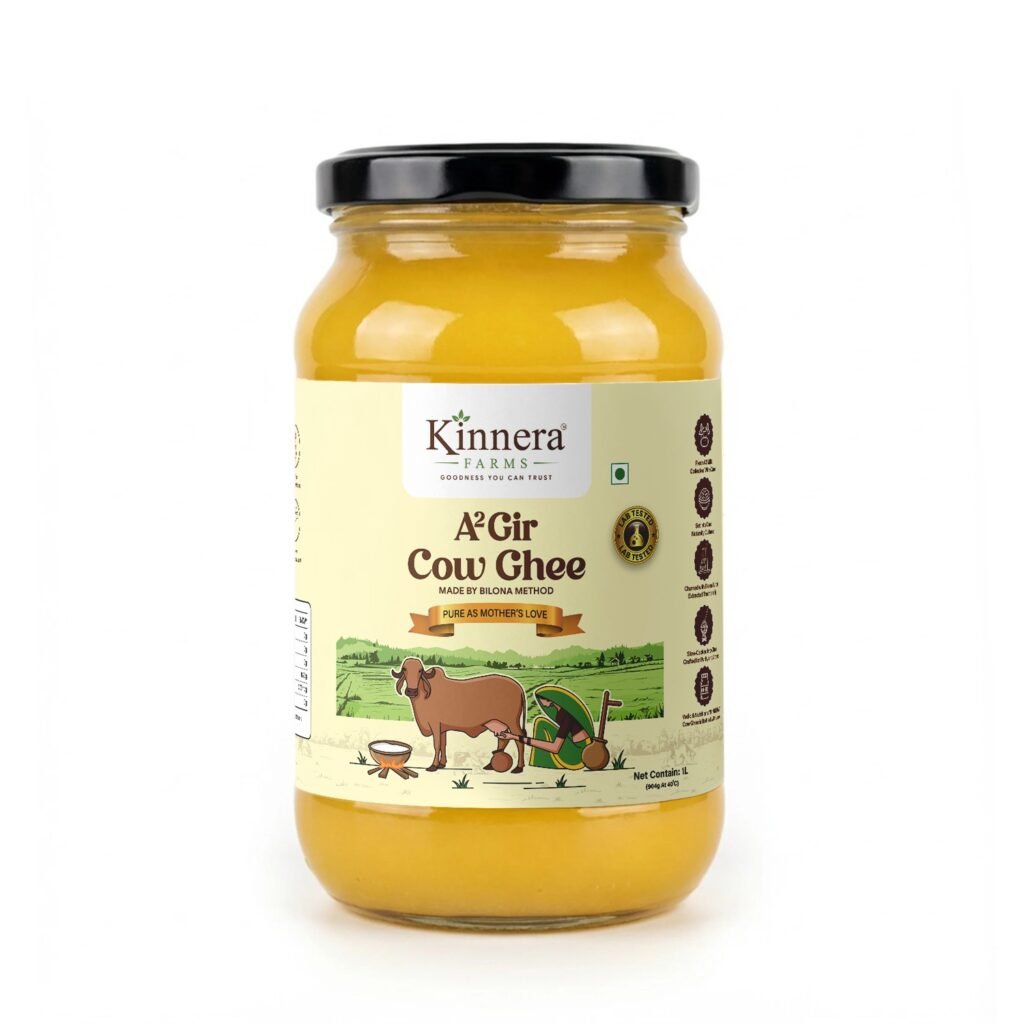
A2 Cow Ghee: What Makes It Different from Regular Ghee? Ghee has been a familiar part of Indian kitchens for generations. Whether it is added to hot dal, spread over a warm roti, mixed into rice, or used in traditional recipes, its rich aroma and buttery taste can make even a simple meal feel special. Today, you may come across different varieties of ghee, including A2 cow ghee, bilona ghee, buffalo ghee and regular cow ghee. With so many options available, it is natural to wonder: What actually makes A2 cow ghee different from regular ghee? The answer starts with the type of milk used, the traditional process followed, and the way the ghee is prepared. What Is A2 Cow Ghee? A2 cow ghee is ghee made from milk marketed as containing the A2 type of beta-casein protein. It is commonly associated with certain traditional Indian cattle breeds, including Gir cows. At Kinnera Farms, the product range includes A2 Gir Cow Bilona Ghee, made as part of its traditional food offering. The brand focuses on carefully sourced ingredients and traditional processing methods. But it is important to understand that the term “A2” primarily refers to a type of beta-casein protein in milk. It does not automatically mean that every A2 ghee product has the same quality. The quality of the milk, sourcing, hygiene, processing and storage also matter. How Is A2 Cow Ghee Different from Regular Ghee? The biggest difference is not simply the word “A2” on the label. It can involve several factors. 1. The Type of Milk A2 cow ghee is generally made from milk that contains A2 beta-casein rather than A1 and A2 beta-casein together. Regular cow ghee, depending on its source, may be made from milk containing different beta-casein variants. However, the exact nutritional and health differences between A1 and A2 milk remain an area of scientific research. Therefore, it is better to choose ghee based on overall quality rather than assuming that the A2 label alone guarantees superior health benefits. 2. The Traditional Bilona Method Many A2 cow ghee products are prepared using the Bilona method, an age-old Indian approach to making ghee. Traditionally, the process involves: This process is different from simply separating cream and converting it into ghee. The traditional approach is one of the reasons Bilona ghee is valued by people who appreciate traditional food preparation. A2 Cow Ghee vs Regular Ghee: A Simple Comparison Feature A2 Cow Ghee Regular Ghee Milk source Milk marketed as A2 milk May come from different cow milk sources Beta-casein type A2 beta-casein May contain A1 and A2 variants Processing Can be made using traditional Bilona methods Can be produced using different commercial methods Taste Often rich and aromatic Depends on milk and processing Texture May vary depending on preparation Varies by product Best choice Depends on sourcing and processing quality Depends on sourcing and processing quality The comparison shows why it is useful to look beyond the product name when buying ghee. Why Does A2 Cow Ghee Have a Rich Aroma? One of the first things people notice about traditionally prepared ghee is its aroma. Good-quality ghee can have a warm, buttery fragrance that becomes especially noticeable when it is added to hot food. The flavour can also vary depending on the milk source, animal diet, preparation method and storage conditions. Traditional Bilona preparation can contribute to the characteristic taste and aroma that many people associate with homemade-style ghee. Is A2 Cow Ghee Suitable for Everyday Cooking? Ghee is commonly used in Indian cooking because it works well in a wide variety of dishes. You can use A2 cow ghee for: You do not necessarily need to use large quantities. A small spoonful can add considerable flavour and richness to a dish. As with other fats, moderation is important, particularly for people who need to manage their overall fat or calorie intake. How to Choose Good A2 Cow Ghee If you are planning to buy A2 cow ghee, don’t choose a product solely because it has “A2” written on the package. Instead, check a few important factors. Check the Ingredients Look for a clear ingredient list and avoid products with unnecessary additives. Understand the Processing Method If you specifically want traditional Bilona ghee, check whether the brand clearly explains its Bilona process rather than assuming that every A2 ghee is Bilona ghee. Look at the Source Information about the milk source and sourcing practices can help you understand what you are buying. Check Packaging and Storage Good packaging protects ghee from moisture, contamination and unnecessary exposure to air. Consider the Brand’s Transparency A trustworthy food brand should provide clear information about its ingredients, product, processing and customer support. How Should A2 Cow Ghee Be Stored? Ghee is relatively easy to store, but proper handling still matters. Keep the container tightly closed and use a clean, dry spoon whenever you take ghee from the jar. Avoid introducing moisture into the container. It is also a good idea to follow the storage instructions provided on the product packaging. A2 Cow Ghee Is More Than Just a Trend A2 cow ghee has become increasingly popular among consumers looking for traditional food products. But the real value of a good ghee lies in its quality, sourcing and preparation, not simply in the label. For people who enjoy the flavour of traditional ghee and want to explore products prepared using time-honoured methods, A2 Gir Cow Bilona Ghee can be an interesting option. Kinnera Farms focuses on naturally sourced ingredients and traditional processing across its range, which includes ghee, honey, cold-pressed oils, flours and spice products. Final Thoughts So, what makes A2 cow ghee different from regular ghee? The main distinction is the type of milk associated with the product, while the preparation method can create another important difference. When A2 cow ghee is prepared using the traditional Bilona method, it offers a style of ghee that many consumers appreciate for its rich aroma, flavour and traditional character. However, don’t